Egretia [ICO] HTML5 Blockchain Engine & Platform
Meet Again With Me In This Article This Article Discusses an ICO:
"EGRETIA"
What is Egretia?
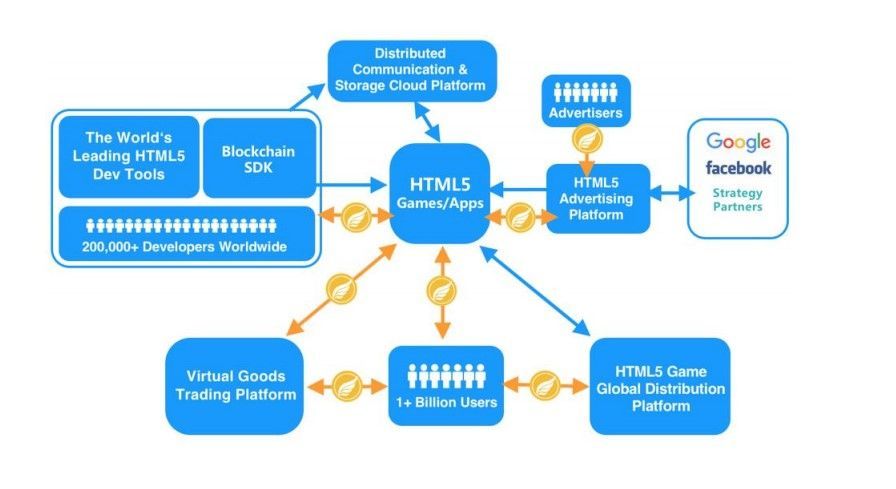
Egretia Platform Game Platform is a distributed HTML5 game. Independent developers can run HTML5 games and release tasks that encourage players to distribute games. After completing the advertising task, players will receive multiple digital cards as gifts. In this way, developers will be able to attract more players, players can win digital cards, thus forming a healthy ecosystem.

Egretia
Egretia joins hands with Egret Technology who has spent four years focusing on HTML5 workflow development. This workflow includes over 10 products, has reached more than 200,000 developers worldwide. Furthermore, the content powered by this workflow has covered 1 billion mobile terminals.
Egretia, the world’s first HTML5 blockchain engine and platform, is now inviting global developers to join the beta test of Egretia Blockchain SDK.
Egretia Blockchain SDK will allow all HTML5 games powered by Egretia engine and tools to easily access the blockchain. Developers can quickly create HTML5 games and applications that provide blockchain capabilities such as digital wallet, smart contract, trading, etc.
At the same time, the Internet giant is also openly embracing HTML5 technology. For example, Facebook has released an instant messaging game based on H5 technology in its Messenger with over 1 billion active users every day; Google has launched PWA, which advocates search and application concepts and implements HTML5 technology for apps and search; WeChat publishes mini-games and triggers explosions in games that are click-to-play and do not need to download; mini-game "Take a hop" has more than 100 million active users every day. HTML5 technology has been globally recognized as a cross platform, cross-terminal and cross-industry solution. Its annual global market scale is estimated at $ 100 billion.
In 2014, "Catch the Crazy Cat" produced by Egret Technologies took the social media by storm and initiated the first year of HTML5 games. After four years of development, the HTML5 game market has grown from the $50 millions in that year to the $6 billions of today, achieving a 120-times growth and validating the existence of a vast blue ocean market for HTML5 technology.
At the same time, Internet giants have also publicly embraced HTML5 technology. For instance, Facebook has released its H5 technology-based instant game in its Messenger with more than 1 billion daily active users; Google has launched PWA, which advocates the concept of search and application and applies HTML5 technology to apps and search; WeChat published mini-games and has ignited a boom in games that are click-to-play and require no downloading; its "Take a hop" mini-game has over 100 million active daily users. HTML5 technology has been recognized globally as a cross-platform, cross-terminal and cross-industry solution. Its annual global market scale is expected to reach $100 billion US dollars.
HTML5 Industry Embraces Blockchain. Both Opportunities and Challenges Exist
While the HTML5 industry has been rapidly developing, we notice that there are still many obstacles regarding its business model, user size, and market size. For example, there is a lack of copyright protection mechanisms and fairness mechanisms to protect games and applications, and a lack of unified and secure trading platforms for virtual assets. The reason for this is because of problems such as the vulnerability of HTML5 game code to plagiarism, the lack of transparency in the probability drop rate in-game tools and the difficulty of circulating virtual assets between games. Blockchain technology is highly respected for its decentralization, security, transparency, non-destructibility, traceability and other characteristics and is naturally suitable for solving the pain points of the HTML5 industry.
However, a seemingly perfect answer still has many problems that reality must confront. The existing blockchain has disadvantages such as low performance and high technical barriers that hinder the integration of HTML5 industry and blockchain technology, and these are preventing HTML5 developers from creating applications that can widely distribute on the blockchain. Egretia Lab is a platform created for the era of blockchain + HTML5. It will solve the fundamental pain points of the HTML5 industry and bring practical, far-reaching significance to the development of the industry.
HTML5 for block chain
The HTML5 Industry Welcomes a Global Boom, and Business Profitability Undergoes Daily Maturity.
From stand-alone machines to the Internet, from online user game to web games, from web games to mobile games, every time the game industry experiences a platform revolution, enormous opportunities have been brought to the game industry. In the current “Red Sea Era” where the mobile game market is fiercely competitive, and head resources are increasingly centralized, HTML5 is emerging as a new technology with transformative values. With its robust cross-platform capabilities, click-to-play propagating features and continuous improvement in engines and tools, an entirely new race track has been opened up for mobile game developers.
While the HTML5 industry has been rapidly developing, we notice that there are still many obstacles regarding its business model, user size, and market size.
Blockchain technology is highly respected for its decentralization, security, transparency, non-destructibility, traceability and other characteristics and is naturally suitable for solving the pain points of the HTML5 industry.
While the HTML5 industry has grown rapidly, we see that there are still many obstacles regarding business models, user size, and market size. For example, there is a lack of copyright protection mechanisms and justice mechanisms to protect games and applications, and the lack of an integrated and secure trading platform for virtual assets. The reasons for this are due to issues like HTML5 game code vulnerability to plagiarism, lack of transparency in the rate of drop in probability in gaming devices and the difficulty of distributing virtual assets between games. Blockchain technology is highly respected for its decentralization, security, transparency, non-destructibility, traceability and other characteristics and is naturally suited for solving pain points from industry
The Egretia public line will use DPoS as a consensus mechanism. The DPoS mechanism is similar to a board vote, in which the coin owner throws a number of nodes using verification mechanisms and accounting records. DPoS can significantly reduce the number of participating nodes to verify and bookkeeping, it would be possible to reach a verification consensus within seconds. The stability of the DPoS mechanism has been verified in BTS, EOS and other projects. Egretia is a public key chain with a high co-processing power where performance is optimized for the needs of the gaming industry. It has a quick TPS (Transaction Per Second). However, in blockchain technology, there is an "impossible triangle", which means that scalability, decentralization and security can not be achieved at the same time. Using DPoS mechanisms to significantly increase scalability, more than 2000 transactions per second can be supported in the initial test series. In the future, we will improve TPS according to business needs.
HOW IT WORKS
The core members of Egretia Lab all come from world-class Internet enterprises and renowned companies, such as Adobe, Microsoft, Qualcomm, Electronic Arts, etc. They have over 20 years of accumulated technology experience.
Edwin Chen, Egretia's co-founder and CEO, has extensive experience and unique insights in the Internet. He is a serial entrepreneur, and Discuz!, the first of the three companies that he founded, was wholly acquired by Tencent. His second company is the world's first social gaming company, and his third is Egret Technology, which currently has more than 200,000 developers worldwide.
Peter Huang, co-founder of Egret Technologies and former Adobe platform technology manager, has extensive product development experience and technical capabilities.
Dirk Meyer, Adobe's Digital Media Division PMO and Senior Project Manager, has over a dozen years of global project management credentials and is a blockchain expert and investor.
Yin Ma, an expert in compilers and toolchains, has worked for companies such as Microsoft, Qualcomm, and Absoft.
Ross Przybylski, producer of Electronic Arts, has extensive experience and expertise in software and game development.
Egretia Lab began brewing its design in mid-2017. It aims to create one of the largest and most complete HTML5 blockchain platforms. In the second quarter of 2018, it shall launch Egretia v1.0 version, which will release many functions such as essential public chains, development tools, and smart contracts. In addition, Egretia Lab has entered into a strategic partnership with world-renowned sports game developer Gala Sports and first-line game developers in Southeast Asia and North America. It will apply Egretia blockchain technology to their games to enhance the game security and promote the popularity of platform tokens worldwide. In the future, Egretia Lab will also support more mainstream public chains and advance the conception and consolidation of blockchain in every field!
Egretia Social Media Platform:
Twitter: https://twitter.com/Egretia_io
Facebook: https://www.facebook.com/Egretia.io/
LinkedIn: https://www.linkedin.com/company/egretia/
Reddit: https://www.reddit.com/user/Egretia/
Instagram: https://www.instagram.com/egretia_io/


Tidak ada komentar: